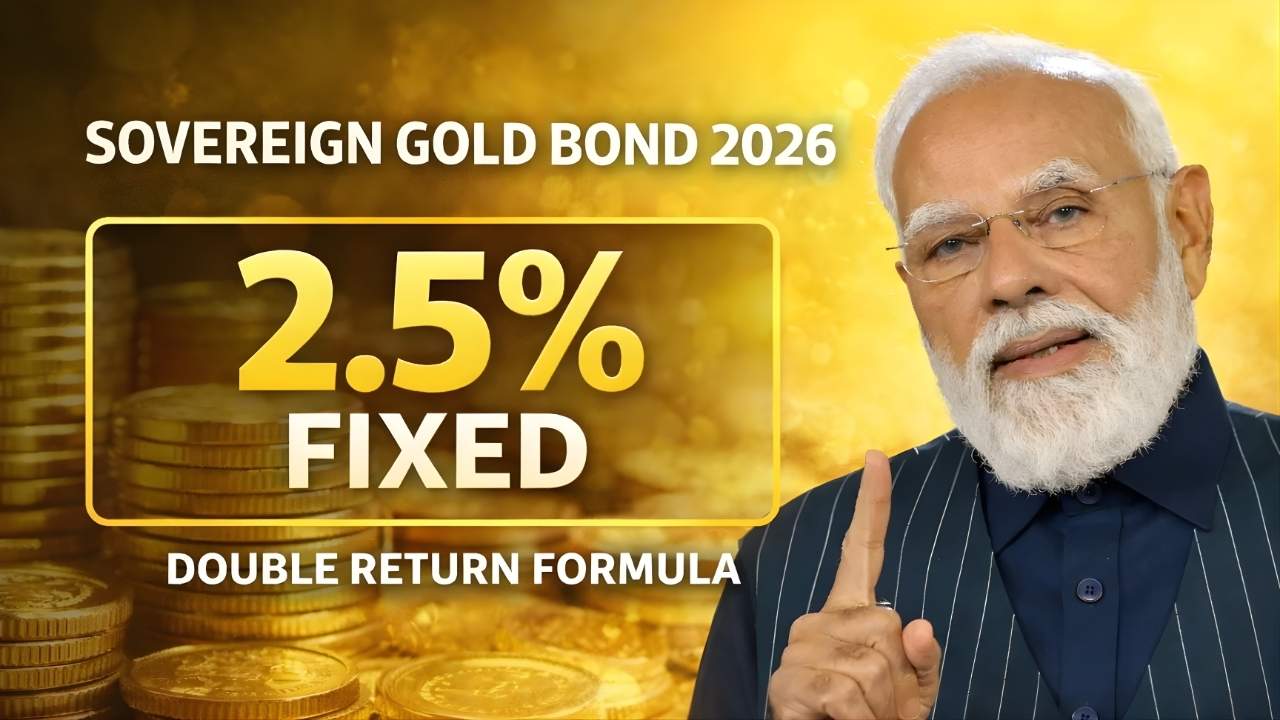
In 2026, long-term gold investors in India are increasingly shifting focus from physical gold to Sovereign Gold Bonds (SGBs). These bonds provide a disciplined, safe, and tax-efficient way to invest in gold while avoiding storage and purity concerns. The SGB scheme offers fixed 2.5 percent annual interest along with the potential for capital appreciation linked to gold price growth, creating a unique double return formula suitable for medium to long-term wealth planning.
Fixed Interest and 8-Year Tenure Structure
Sovereign Gold Bonds generally have an 8-year maturity period. Investors benefit from a fixed 2.5 percent annual interest calculated on the initial investment, which is paid semi-annually directly into the bank account. Early redemption is permitted after the 5th year on designated interest payment dates, providing some flexibility. Both the issue price and redemption value are linked to the prevailing official gold price, ensuring returns are directly tied to the performance of the underlying asset.
Gold Price Appreciation Advantage
Beyond the fixed interest, investors can profit from long-term gold price growth. As gold prices increase, the redemption value at maturity rises proportionally, offering both capital appreciation and steady interest income. Unlike physical gold, SGBs eliminate making charges, storage costs, and purity concerns, making them a cost-efficient alternative. This structure is particularly attractive for investors seeking exposure to gold with predictable returns and reduced operational hassles.

Government Backing and Safety Structure
SGBs are issued by the Government of India and managed by the Reserve Bank of India, providing sovereign backing that guarantees interest payments and redemption value. While secondary market prices can fluctuate with gold prices, there is no risk of default under the scheme rules. This makes the investment secure and suitable for conservative investors who want gold-linked returns with minimized risk.
Taxation and Liquidity Rules
Interest earned at 2.5 percent is taxable as per the investor’s income tax slab. However, capital gains realized on redemption after the 8-year maturity are generally exempt from tax for individual investors. If the bonds are sold on the stock exchange before maturity, capital gains tax applies according to the holding period. Liquidity in the secondary market depends on trading volume, and investors should plan accordingly if early exit is considered.
Return Calculation and Wealth Growth Example
For instance, an investment of ₹5 lakh in a Sovereign Gold Bond yields ₹12,500 annual fixed interest before tax. If gold prices rise by 20 percent over the holding period, the redemption value increases proportionally, resulting in combined returns from fixed interest and gold appreciation. This dual benefit structure offers a balanced approach to wealth accumulation, making SGBs an appealing choice for risk-averse investors who seek both steady income and asset growth.

Why SGBs Are Attractive in 2026
Sovereign Gold Bonds combine predictable fixed income with potential capital gains, offering a unique investment proposition compared to physical gold or traditional fixed-income instruments. With sovereign backing, tax efficiency, and no storage concerns, SGBs provide a safe and convenient route for long-term gold investors. The ability to earn semi-annual interest along with exposure to gold price movements makes this instrument ideal for retirement planning, wealth preservation, and portfolio diversification.
Final Verdict
Sovereign Gold Bonds 2026 offer investors a disciplined, secure, and profitable way to participate in gold markets. With 2.5 percent fixed annual interest, long-term price appreciation potential, sovereign backing, and tax-efficient benefits, SGBs create a compelling double return formula. For investors seeking stable income along with exposure to gold, this scheme provides an attractive and low-risk option for medium to long-term wealth growth.