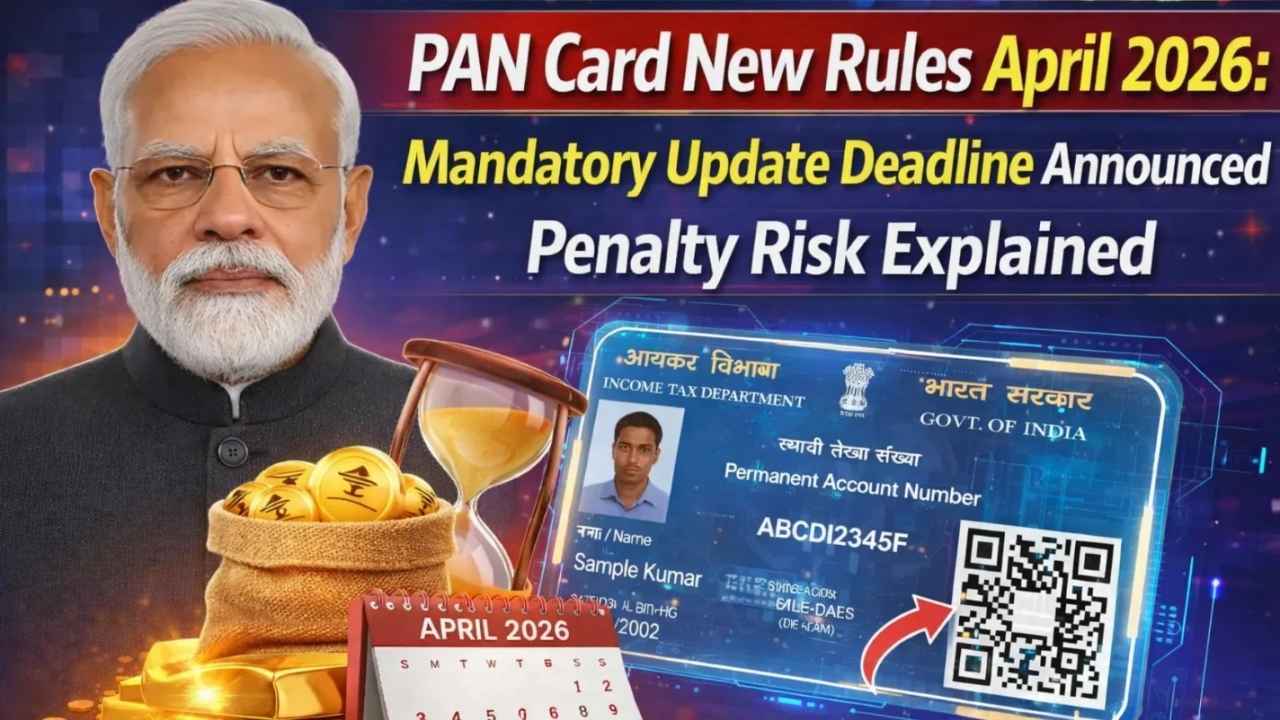
Financial documentation in India is moving toward tighter digital integration. From income tax filing to bank transactions and investment verification, the Permanent Account Number plays a central role in identity validation. With new compliance measures coming into effect before April 2026, PAN holders are being urged to review and update their details to avoid disruptions.
The revised framework focuses on eliminating duplicate PAN records, ensuring accurate identity mapping, and strengthening transparency in financial transactions. As systems become more interconnected, even minor mismatches in personal details can create temporary obstacles.
Mandatory PAN Update and Aadhaar Linking Requirement
Under the updated compliance guidelines, PAN holders must ensure that their Aadhaar is properly linked and that personal details such as name, date of birth, and mobile number match official records. Any discrepancy between PAN and Aadhaar databases may trigger an inoperative status.
If a PAN becomes inoperative, it cannot be used for critical financial activities. This includes filing income tax returns, opening new bank accounts, processing loans, investing in mutual funds, or making high-value deposits. Essentially, the number remains assigned to you, but its functionality is temporarily suspended until corrections are made.
With the April 2026 deadline approaching, early verification is strongly recommended to prevent last-minute complications.

What Happens If You Miss the Deadline?
Non-compliance within the prescribed timeline may result in penalties under the Income Tax Act. In addition to monetary fines, financial inconvenience can be more immediate. Banks and financial institutions may refuse to process transactions where the PAN is inactive.
Another key concern is higher Tax Deducted at Source. If your PAN is not valid or operational, certain payments may attract TDS at a higher rate. This can directly reduce take-home income for salaried individuals or impact cash flow for business owners.
High-value transactions such as property purchases, large fixed deposits, or significant investment contributions may also face compliance checks. An inactive PAN can lead to delays or rejection of these transactions until the issue is resolved.
Impact on Banking, Loans and Investments
Banks and non-banking financial institutions rely heavily on PAN verification for KYC procedures. Whether you are applying for a personal loan, opening a new savings account, or investing in financial products, PAN authentication is mandatory.
If the PAN status is flagged as inoperative, certain services may be paused. Loan approvals could be delayed, investment accounts may not be activated, and income tax return submissions may be blocked.

For salaried employees, an inactive PAN can create complications in salary processing and TDS reporting. For business owners, it may affect vendor payments and compliance reporting. This is why reviewing your PAN status well before the deadline is essential.
How to Update and Verify PAN Details
The process of linking PAN with Aadhaar or correcting details can generally be completed online through the official income tax portal. Authentication is usually done through OTP verification linked to the registered mobile number.
If there are discrepancies in name spelling, date of birth, or address, supporting documents such as Aadhaar card, passport, or voter ID may be required for correction. Once the request is submitted and verified, the PAN is reactivated for regular financial usage.
It is advisable to keep mobile numbers and email addresses updated to receive confirmation alerts and compliance notifications.
Why Early Action Matters
Many taxpayers tend to delay documentation updates until the final weeks before a deadline. However, digital verification systems can take time to process corrections, especially if supporting documentation needs manual review.

Proactively checking your PAN status reduces the risk of facing transaction blocks, higher tax deductions, or penalties. A simple verification today can prevent financial inconvenience tomorrow.
Final Verdict
The new PAN compliance rules coming into focus before April 2026 underline the importance of accurate and linked identity records. Ensuring Aadhaar linkage and correcting mismatched details can prevent penalties, higher TDS deductions, and disruptions in banking or investment activities. Taking timely action will help maintain seamless access to financial services and keep your tax compliance on track.
Disclaimer
Final PAN update deadlines, penalty provisions, compliance requirements, and linking rules are subject to official notifications issued by the Income Tax Department and the Government of India. Taxpayers should verify the latest updates through authorised government portals before taking any financial action.
